Stop Chasing Attention and Start Creating Relevance: The New Rules of Visibility in the AI Era
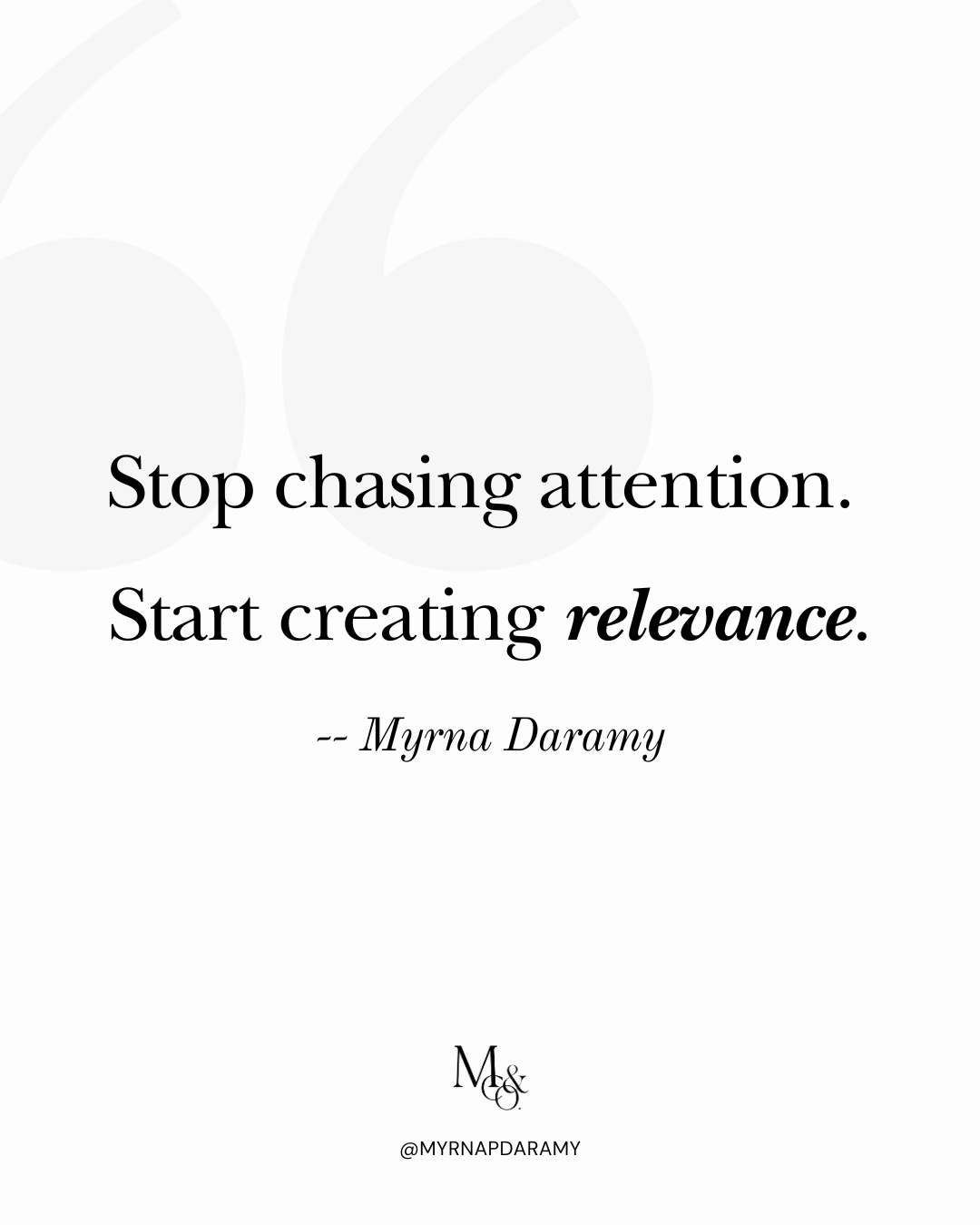
Recently, I shared a simple thought on social media:
Stop chasing attention. Start creating relevance.
At the time, this wasn't a reaction to a news headline. It was an observation based on something I've seen repeatedly throughout my career. Businesses that experience the most sustainable growth aren't always the ones getting the most attention. They're the ones that have become genuinely relevant to the people they serve. That's a distinction I've been thinking about for years.
We've spent the better part of a decade measuring visibility through impressions, clicks, followers, and reach. Yet the businesses that consistently earn trust, referrals, and long-term growth tend to have something else in common. They understand their audience deeply, communicate clearly, and become known for solving specific problems. In other words, they've become relevant.
So when Google announced one of the biggest changes to Search in more than 25 years, I wasn't immediately thinking about the technology. I was thinking about what it revealed. And although the conversation around AI has been building for years, this announcement brought one thing into focus: we're moving toward a world where being the most visible isn't necessarily the goal. Being the most trusted and relevant source of information is.
To me, that's not a disruption. It's confirmation. The future of visibility isn't about who can attract the most attention. It's about who can provide the most relevant answers.
What Google's AI Search Evolution is Really Telling Us
Google's AI Overviews now reach more than 2.5 billion users. AI Mode has surpassed 1 billion monthly users, with queries more than doubling every quarter since launch. Those numbers are significant. But I don't think they're the most important part of the story. What matters is how people are changing the way they search for information.
For years, search was largely about finding answers. You typed a question or keyword into a search query, reviewed a list of results, and decided which source seemed most credible. Today, people are increasingly asking AI to do the filtering for them. They want recommendations, summaries, and context. They want guidance, not just information.
That shift in behavior has changed what visibility actually means.
Being visible is no longer just about appearing in search results. It's about creating enough trust, authority, and relevance that your expertise becomes part of the answer.
The Principals Haven't Changed
Back in 2016, I developed a framework called Digital Media Optimization, or DMO. At the center of that framework was a simple equation:
SEO = Frequency + Relevancy + Recency
Not because it sounded clever, but because it reflected a pattern I kept seeing.
The businesses that earned trust weren't necessarily the ones producing the most content or generating the most noise. They were the ones that showed up consistently, created meaningful value, and became known for solving specific problems for specific people.
That's what made Google's announcement so interesting to me. Beneath the conversations about AI, algorithms, and the future of search was a much simpler idea: trust still matters. People still look for expertise. They still look for credibility. They still look for sources they can rely on when making decisions. The technology is evolving, but the fundamentals haven't changed nearly as much as people think.
What Working in Two Different Worlds Has Taught Me
One of the perspectives I bring to this conversation comes from spending my career in two very different professional worlds. On one side, I work with business owners and entrepreneurs on visibility, positioning, and organic growth. On the other, I work in the MedTech industry, where trust, clarity, and credibility aren't nice-to-haves. They're the baseline expectation.
In healthcare, information isn't valuable because it gets attention. It's valuable because it's accurate, useful, and reliable. People make real decisions based on that information every day. The stakes may look different across industries, but the lesson applies everywhere. Whether you're a healthcare company, a creative entrepreneur, a consultant, or a local business owner, people are looking for sources they can trust. And increasingly, AI is helping them determine which sources deserve that trust.
What Relevance Actually Means
Relevance is one of those words that gets used often, but is rarely defined. To me, relevance is the alignment between what you know, what you offer, and what your audience genuinely needs at a particular moment in time.
Attention gets people to notice you.
Relevance gives them a reason to trust you.
And trust is what creates momentum.
The businesses that earn trust more easily earn referrals, recommendations, and opportunities over time. They become known for something, and they build a reputation. Most importantly, they consistently deliver on the expectations they create. That's what relevance looks like in practice.
The Businesses That Will Win in the AI Era
I don't believe the businesses that thrive in the years ahead will be the ones creating the most content. I think they'll be the ones creating the most useful content and the ones answering the questions their audience is already asking. It will be the ones who communicate clearly and consistently across every platform, or the ones with a recognizable point of view, or the ones who invest in trust long before they need it.
Because when AI systems evaluate information, they're looking for signals of expertise, authority, and relevance. Those are the same qualities people have always looked for when deciding who to hire, buy from, recommend, or trust.
The technology is evolving, but human decision-making isn't.
One Few Major Questions Worth Sitting With
As AI becomes more integrated into how people discover businesses, products, and expertise, I think every business owner should ask themselves one honest question:
- If someone knew nothing about your business and AI had to explain who you are, what story would it tell?
- Would it understand what you do?
- Would it recognize your expertise?
- Would it know who you serve?
- Would it find enough evidence to trust your authority?
Those questions matter because your digital presence is becoming more than a collection of platforms and profiles. It's becoming your reputation at scale. And reputation isn't built by attracting attention; it's built by earning trust.
Want More Insights Like This?
If there's one thing I've learned over the years, it's that sustainable growth isn't about gaming algorithms. It's about building trust, creating meaningful connections, and becoming the most relevant answer for the people you serve.
If that resonates with you, I'd love to stay connected. Join my newsletter email list for insights on visibility, organic growth, digital strategy, and building a business people actually trust. No fluff. Just thoughtful strategy and practical ideas you can apply to your own business.
Frequently Asked Questions
- What does relevance mean in marketing?
Relevance is the alignment between what your audience needs and what your business provides. It's less about generating visibility and more about earning trust through usefulness and consistency. - How is AI changing search?
AI is shifting search from a list of links to a more conversational experience that synthesizes answers, recommendations, and guidance. This places greater importance on expertise, authority, and trustworthiness as ranking signals. - What is Digital Media Optimization (DMO)?
Digital Media Optimization is a framework developed by Myrna Daramy in 2016 that defines sustainable visibility through three variables: Frequency, Relevancy, and Recency. The core equation is SEO = Frequency + Relevancy + Recency. - Why is relevance more important than attention in the AI era?
Attention creates awareness. Relevance builds trust. In an AI-driven search environment, trust is what earns recommendations, citations, and long-term visibility. - How can I make my business more relevant online?
Start by understanding the specific questions your audience is already asking. Create helpful, well-organized content that answers those questions clearly. Maintain consistency across your digital presence and focus on providing genuine value rather than simply attracting attention.
Keywords: AI search strategy, organic growth marketing, Google AI Overviews, digital media optimization, DMO framework, content marketing for business owners, SEO relevance, AI Mode Google, thought leadership content strategy, visibility strategy.
Keywords: AI search strategy, organic growth marketing, Google AI Overviews, digital media optimization, DMO framework, content marketing for business owners, SEO relevance, AI Mode Google, thought leadership content strategy, visibility strategy
About Myrna